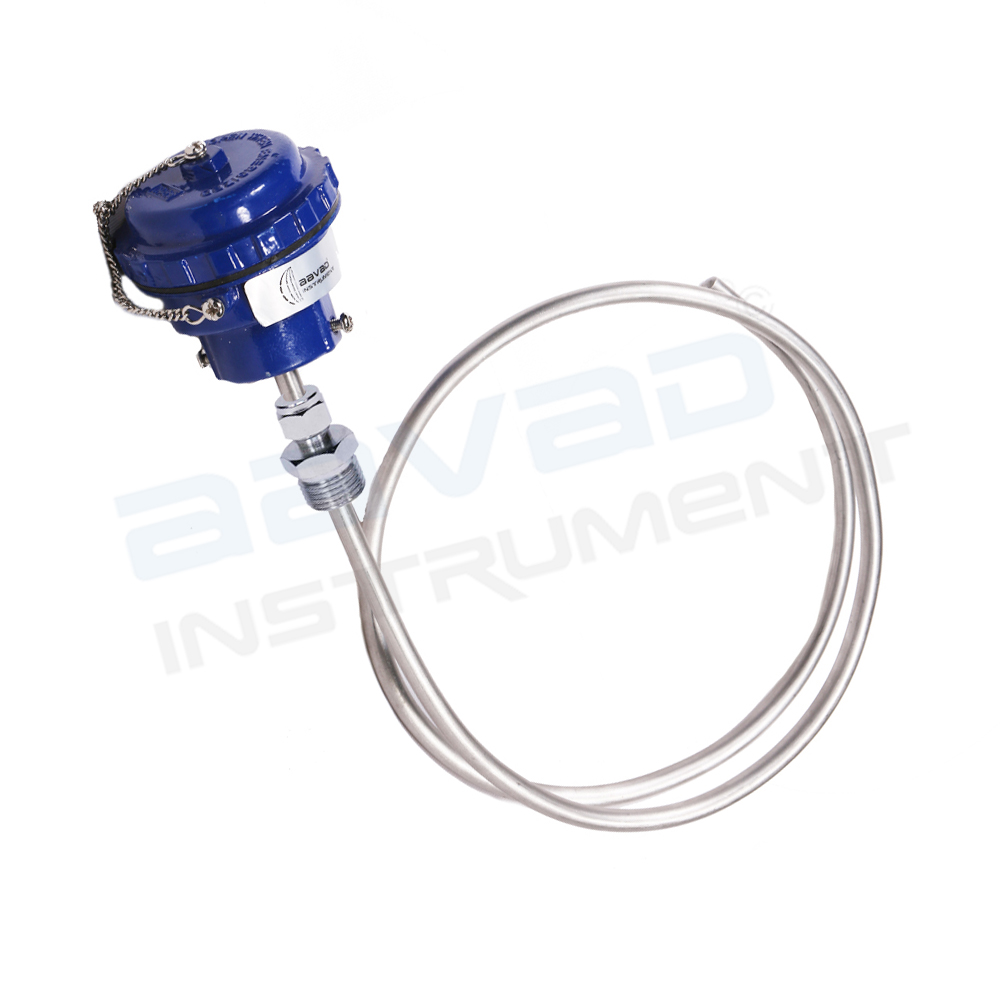
What do you need from an RTD sensor when the true measurement point is 3 meters deep inside a storage tank or distillation column?
At 3000mm insertion length with a duplex, redundant sensing circuit, this Mineral Insulated RTD Sensor is engineered specifically for extra-deep tanks, tall columns, and extended pipeline runs, and it’s available from Buyinstrument.shop at a transparent, factory-direct fixed price with zero middleman markup and ready stock for fast nationwide dispatch — removing the long custom-fabrication wait typical of extreme-length sensors.
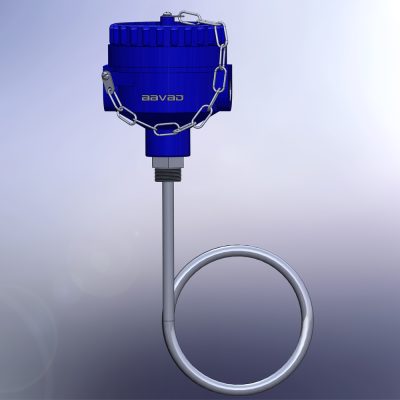
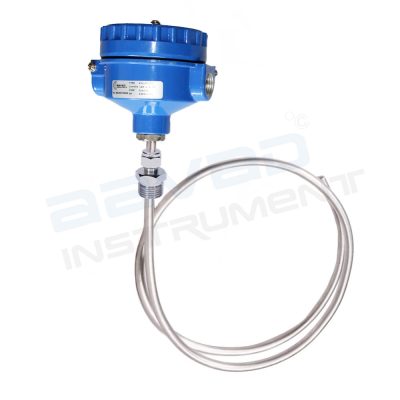
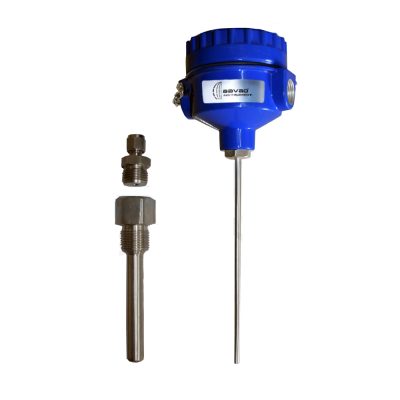
The sensor houses two fully independent 3-wire PT100 circuits (3+3 wire duplex) inside a single SS316 sheath, packed with compacted mineral (MgO) insulation along the full 3000mm length. This insulation is not just a thermal-response feature at this scale — it’s a structural necessity, protecting the internal element wiring from vibration fatigue and mechanical stress across an unusually long probe run that shorter sensors never encounter. With a -50°C to 400°C operating range and Class A accuracy, the sensor delivers repeatable, tight-tolerance readings suitable for critical process control loops in power generation, large-scale chemical storage, and heavy process manufacturing. The duplex configuration matters enormously at this length: because pulling and reinstalling a 3-meter probe is a significant maintenance operation, having a built-in second measurement circuit dramatically reduces how often that disruptive task needs to happen. The 1/2″ BSP adjustable compression fitting allows precise depth setting, and the IP65-rated die-cast aluminum head with 3/4″ ET cable entry and nickel-plated ceramic terminal block provide a durable, corrosion-resistant termination point. This sensor is manufactured by Aavad Instrument Pvt. Ltd. under ISO 9001:2015 certified manufacturing standards and is CE marked, confirming conformity with EU safety, health, and environmental protection requirements.
Key Features
• Extreme 3000mm insertion length for deep tanks and tall columns
• Duplex 3+3 wire configuration for built-in redundancy at extended depth
• Mineral (MgO) insulation for durability across the full long probe run
• Class A accuracy across a -50°C to 400°C range
• IP65-rated die-cast aluminum head with 3/4″ ET cable entry
• SS316 construction for corrosion resistance in demanding environments
Applications
• Extra-deep storage tank temperature monitoring
• Tall distillation column temperature profiling
• Power plant boiler and large tank monitoring
• Extended pipeline run temperature measurement
• Heavy chemical process temperature sensing
• Cement and large-scale industrial process monitoring
FAQs
1. Is a 3-meter RTD sensor difficult to install correctly?
A 3-meter RTD sensor requires careful handling and proper mechanical support along its length to prevent excessive bending or damage to the sheath. The adjustable compression fitting allows the required insertion depth to be set accurately during installation. For long probes, especially in horizontal installations, intermediate supports may be recommended where applicable to minimize mechanical stress and vibration.
2. Why choose duplex instead of simplex at this extreme length?
A duplex RTD provides two independent PT100 sensing elements within the same probe assembly. At an insertion length of around 3 meters, removing and reinstalling the sensor can be a significant maintenance task. The second PT100 circuit provides a backup measurement path that can be used if the primary element or circuit becomes unavailable, potentially reducing maintenance-related downtime.
3. What industries typically need a sensor this long?
Extra-long RTD sensors with 2000mm+ insertion lengths are commonly considered for applications involving deep vessels, large storage tanks, extended pipelines, and large-scale process equipment. Typical industries include power generation, petrochemical storage, cement manufacturing, chemical processing, and heavy manufacturing, where temperature measurement may be required deep inside tanks, columns, boilers, or extended process runs.